How it sounds
“There is no EN 50770 for our device. So this does not concern us yet.”
A remote maintenance module for packaging lines: a web interface, remote access, firmware updates. Machine builders install it in their machines. The sentence above comes up in the project meeting, and nobody contradicts it. The situation is typical and not modeled on any particular company.
The pattern behind it
The missing profile is read as a missing obligation. The Cyber Resilience Act, however, starts from the product with digital elements, not from whether a standard exists for it. Classification comes first: if the core functionality matches a category in Annex III, the product is an important product. A remote maintenance module whose core functionality is a VPN falls under class I. Without a matching profile, the selection remains: the horizontal work (EN 40000-1-2, -1-3 and -1-4: principles, vulnerability handling, generic security requirements) and the broad OT basis (EN IEC 62443-4-1 for secure development, EN IEC 62443-4-2 for component security). Which of these apply follows from the risk assessment. The bundle of standards is the result of that assessment, not a substitute for it.
Write it Safe — the information for use
The next firmware update closes remote access by default. The manual still says “Remote maintenance active on delivery.” That one sentence touches commissioning, the activation by the operator and the safety messages. It also touches the information the Cyber Resilience Act requires for users: the support period, secure use, how updates are provided and a contact point for reporting vulnerabilities.
Prove it Safe — the decision as evidence
Without a profile, the documentation has to state why these standards were selected and why a requirement is considered not applicable. The reasoned selection is itself part of the evidence. It belongs in the technical documentation with its date, the edition of each standard and the reference to the risk assessment.
A standard does not automatically confer a presumption of conformity. What counts is the reference in the Official Journal, the edition, its limitations and the requirements it covers. Conformity assessment remains necessary, and for a class I product its route depends on exactly this question. The manufacturer may assess the product itself only when it fully applies harmonized standards, common specifications or a European cybersecurity certification at assurance level at least “substantial.” Where these do not exist or are applied only in part, the route leads through a notified body: EU-type examination (module B) followed by conformity to type (module C), or full quality assurance (module H, Article 32(2)). Responsibility stays with the manufacturer and, where required, the notified body.
Keep it Safe — the change
Work on the standards is partly still in progress. When a matching profile is published later, when the product changes or when the threats change, the affected decisions are reassessed, and the information follows. From January 20, 2027, the Machinery Regulation adds protection against corruption. For the machine builder who installs the module, its security then becomes a question of machine safety.

Three views of the same situation
Penguins: the problem is there but not yet seen
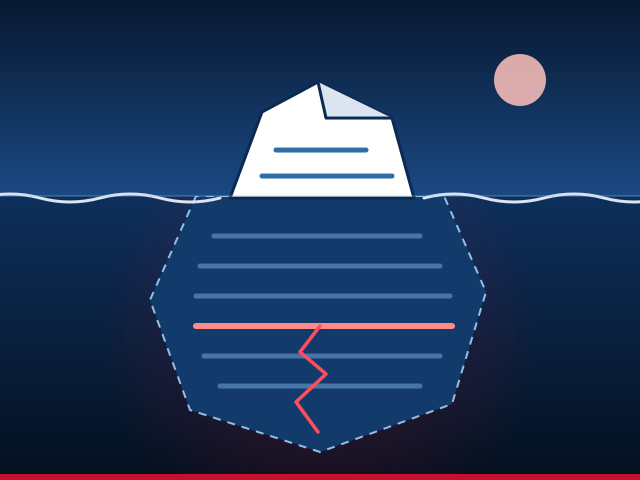
The sentence “There is no EN 50770 for our device” is correct. The conclusion drawn from it is not. The problem is already in the manual: “Remote maintenance active on delivery.” With the next update this sentence becomes wrong. Nobody reads it as a security statement, because it sits under “Commissioning.” Yet it is a configuration statement: the value is part of the firmware as delivered, and for exactly this state Annex I of the Cyber Resilience Act requires a secure by default configuration. Comparing the default values of two firmware versions side by side finds the wrong sentence in the manual before an operator asks. Otherwise it becomes visible only when an operator asks, or when market surveillance requests the technical documentation.
Cheese: something has moved
More than one standard has moved. The reporting obligations of the Cyber Resilience Act have applied since September 11, 2026. The Machinery Regulation, with its protection against corruption, applies from January 20, 2027. The main obligations follow on December 11, 2027. In between, work on the standards is partly still in motion. Waiting for the matching profile means starting later with documentation whose decisions nobody can explain any more. For a class I product, this also means waiting for the route without a notified body.
Meerkats: the organization resists the new
“Security is for development. The manual comes at the end.” With this sentence every department stays in its own burrow. Development decides on access, the editorial team learns about it from the release notes, and quality assurance finds the reasoning nowhere. The Cyber Resilience Act asks the same of all three: a decision that arrives in the information for use and can still be found as evidence. No department has to leave its burrow for this. What it takes is a shared path on which decision, information and evidence stay together.
What it takes
- A list of the security decisions that change what users see, set up or have to do
- For each decision, the place in the information for use where it takes effect
- The reasoned selection of standards, with edition, date and reference to the risk assessment
- A defined trigger that leads every change of the product, the threats or the standards back to these places, for example comparing the default values of each new firmware version with the previous one
Technical communication does not replace a protective measure, a legal assessment or the conformity assessment. It makes sure that the decisions reach the people who use the product and remain traceable as evidence.
How it starts
With a review of the existing documents: where is each security decision recorded, and where does it take effect in the information for use. One product is enough to begin with.
Sources
- CEN-CENELEC, “CRA Unlocked” (May 7, 2026), on the standardization work for the Cyber Resilience Act
- Regulation (EU) 2024/2847 (Cyber Resilience Act), in particular Article 7 and Annex III (important products), Article 14 (reporting obligations), Article 27 (presumption of conformity), Article 32 (conformity assessment procedures), Annex I (secure by default configuration) and Annex II (information and instructions to the user)
- Regulation (EU) 2023/1230 (Machinery Regulation), Annex III, section 1.1.9 (protection against corruption)
The status of the standards changes. Check the current status and editions before use.